
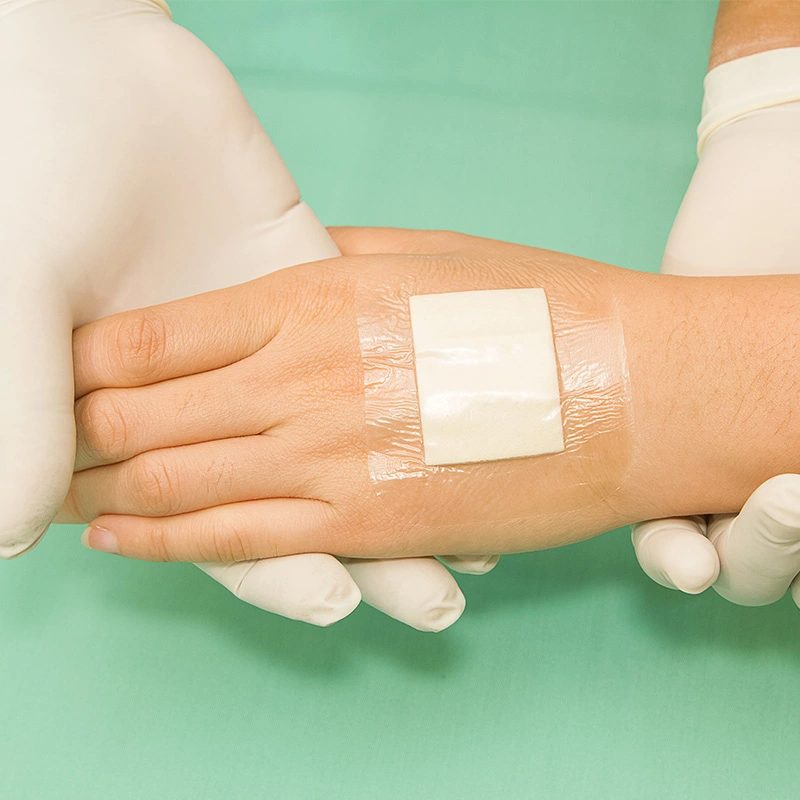
Biodegradable tpu film for hygiene products entered the conversation the way most material shifts begin: a large brand made a public commitment, and its supply chain was told to answer. For absorbent hygiene manufacturers the backsheet is the hardest component to move, because it has to stay liquid-tight under load, stay soft against skin, run at high line speed without breaking, and now also carry an end-of-life story a consumer can understand in one sentence on a pack.
What follows is a practical view of where a biodegradable TPU construction genuinely fits that envelope, where it does not, and the questions a hygiene brand should answer before it replaces a material that already runs reliably on existing equipment.
Why the Backsheet Is the Hardest Component to Change
A diaper or a sanitary pad is a stack of dissimilar materials bonded under tension. The absorbent core does the work, but the backsheet is what the consumer actually touches, hears and judges. It sets the hand feel, the crinkle, the print quality and the leakage promise. Change it and you have changed the product, which is why so many sustainability programmes stall at the backsheet and quietly redirect to packaging instead.
The constraints are unusually tight and often contradictory. Thin gauges are needed for softness; thin gauges are also where web breaks appear at 300 metres per minute. Breathability helps skin comfort but must not open a path for liquid. Print registration and surface energy matter for brand graphics and for hot melt adhesive anchorage. Add a biodegradability claim and the formulator is asked to satisfy a fourth axis that pulls against the first three.
What Biodegradable Tpu Film for Hygiene Products Has to Deliver
- Barrier under load. Hydrostatic resistance has to hold while the product is compressed and sat on, not only in a flat bench test.
- Consistent tensile behaviour. Line speed is fixed by the weakest point of the roll, so gauge variation across the web matters more than the average value.
- Softness at low thickness. A film that meets every technical number but feels rigid is not a backsheet a parent will accept twice.
- A defensible end-of-life claim. The wording on the pack has to match the test method behind it. Vague language invites regulatory challenge in the EU and in North America.
| Hygiene Component | Why the Material Choice Matters | Typical Trial Risk |
|---|---|---|
| Diaper backsheet | Carries the leakage promise, the hand feel and all brand print | Web breaks when gauge is reduced to gain softness |
| Sanitary napkin wrapper | High-speed wrapping needs slip control and clean seal release | Seal strength drift after a few hundred cycles |
| Incontinence briefs | Higher load case, so hydrostatic performance dominates every decision | Barrier passes flat testing but fails in compression |
| Feminine care absorbent layer | Skin contact area is large, so softness and breathability lead | Breathability gain opens a liquid path at the edges |
| Wipes and pouch film | Chemical compatibility with lotions and preservative systems | Adhesion loss or hazing after accelerated ageing |
Read that table as a reminder that one roll rarely serves a whole portfolio. The team that maps each component to its dominant failure mode before the first trial usually saves a full development cycle.
Where the Material Earns Its Place on the Line
Thermoplastic polyurethane is a useful candidate for hygiene because it can be tuned rather than merely selected. Hardness, thickness and surface treatment are independent variables, so a converter can dial softness and tensile strength separately instead of accepting whatever a polyolefin grade offers as a package. That flexibility is what makes the biodegradability conversation possible in the first place, because the mechanical targets can be rebalanced rather than abandoned.
The honest limit is that biodegradability is environment-dependent. A film that mineralises in an industrial composting regime with controlled temperature and moisture will behave differently in a landfill or a home compost heap, and claiming otherwise is where brands get hurt. The safe commercial route is to match the claim to the disposal route that actually exists in the target market, and to say so plainly on the pack.
What a credible hygiene film programme looks like:
• One material family, tuned per component rather than bought per component.
• A written end-of-life route that matches the disposal infrastructure in the market.
• Trial rolls with the same gauge tolerance as production rolls.
• A supplier who will still make the grade two seasons after launch.
Specification Checklist Before a Trial Run
Most failed trials trace back to a specification written from a datasheet rather than from the line. The four items below are the ones that repeatedly decide whether a first run produces sellable product or a scrap bin.
- State the conversion line, not just the product. Web tension, roller diameter and line speed change the acceptable gauge window more than the product design does.
- Agree the test method for barrier. A number without a method is not a specification, and different methods give results that differ by a factor, not a few percent.
- Fix the print and adhesion route early. Surface energy treatment and corona level have to be settled before graphics are approved, not after.
- Define the ageing test. Accelerated ageing at elevated temperature is the cheapest way to discover an adhesive problem before a customer does.
Bring those four answers to a supplier and the trial becomes an engineering exercise with a schedule. Leave them open and the trial becomes a series of surprises, each one costing a production slot.
Working With a Film Manufacturer on a Hygiene Programme
Hygiene work is a manufacturing problem before it is a trading one. A brand that needs the same backsheet grade in three years, with the same hand feel and the same print behaviour, is buying process stability rather than a container of film. That is the argument for dealing directly with the extruder. Zhejiang Huanlong has manufactured functional films since 2007 and runs three production bases in Zhejiang with blown film, extrusion and foaming capacity, two research centres and more than thirty engineers, which is the kind of infrastructure that makes a repeat run reproducible rather than approximate.
Our own sustainable material programme is documented on the biodegradable tpu film page, and the wider material set that hygiene converters draw on sits under all products.
Because Huanlong manufactures rather than distributes, a hygiene brand can bring the line parameters into the specification meeting and get a construction proposed against them. That conversation costs nothing and usually shortens development by a full season, which on a product with a two-year launch cycle is the difference between leading a category and following it.
Frequently Asked Questions About Biodegradable Tpu Film for Hygiene Products
Q1. Can a biodegradable backsheet match a conventional one on leakage performance?
It can match it, but not at the same thickness. TPU constructions typically need a slightly higher gauge or a different layer build to reach the same hydrostatic value, and the trade-off appears as a change in hand feel. Bring the two films to the same bench test and the difference becomes an engineering decision instead of a marketing argument.
Q2. Does biodegradability survive the printing and lamination steps?
The film does, but the finished article may not, because inks, adhesives and coatings carry their own end-of-life behaviour. If the compostability claim applies to the whole product, every layer has to be assessed, not just the backsheet. Ask suppliers for the full bill of materials rather than the film alone.
Q3. Will existing converting lines run the material without modification?
Mechanical behaviour is close enough that most lines run it after a tension and temperature review, but sealing parameters usually need re-tuning because the softening window differs. Plan a half-day of line time for that work rather than discovering it during a full production run.
Q4. What certifications should a hygiene brand look for?
Start with what the maker actually holds rather than what the market talks about. Zhejiang Huanlong is certified to OEKO-TEX® 100, Bluesign®, GRS and ISO 9001:2015, alongside ISO 14001 and ISO 45001 for environmental and occupational safety management. Test standards quoted for compostability or flame behaviour are separate matters and should always be requested as test reports.
Q5. How long does a switch realistically take from sample to launch?
For a backsheet substitution with unchanged product design, a well-run programme can move from first sample to line trial in a few months and to launch in under a year, provided the ageing and barrier methods were agreed up front. Programmes that stall almost always stall on test methodology rather than on material availability.
Hygiene brands do not get credit for a material change that nobody can see, and they take damage from a claim that cannot be defended. The route that works is unglamorous: define the disposal route, agree the test methods, tune the gauge against the real line, and verify the roll you will actually receive. Do that and biodegradable tpu film for hygiene products stops being a pilot project and becomes an approved line item with a cost and a delivery date.