
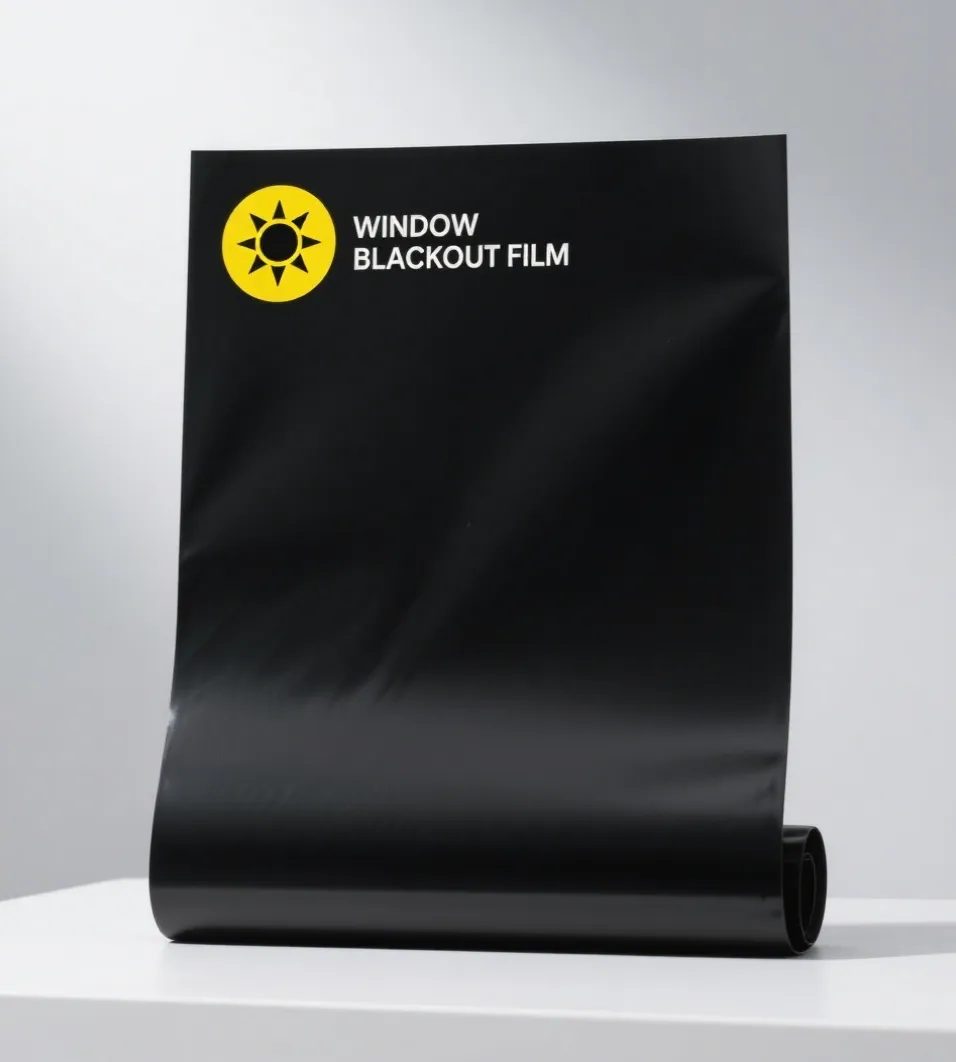
Window blackout film for home theaters is a light-control material applied to the glazing of a dedicated viewing room, and it solves two problems at once: stray light that lifts the black level on screen, and the reflective glass surface that bounces sound around the room. It matters because most home theaters are built in rooms that already have windows, and those windows quietly undo the money spent on a projector.
Integrators usually reach this conclusion late in the project. The screen has been chosen, the seating has been positioned, the amplifier has been selected, and then someone watches a dark scene at four in the afternoon and notices that the black areas of the picture look grey. The culprit is not the projector, it is the daylight coming through the window behind it.
Why Window Blackout Film for Home Theaters Is a Two-Part Solution
The first job is obvious. A projector can only produce contrast against whatever ambient light the screen receives, so every unit of daylight that reaches the screen raises the floor of the image. Bringing the room down to a controlled darkness is what allows a mid-range projector to look better than an expensive one in an untreated room.
The second job is less obvious and often more valuable. Bare glass is one of the most reflective surfaces in a domestic room, and a large window behaves like an untreated first-reflection point that muddies dialogue and blurs the front soundstage. Damping that surface with a film layer changes what the room does to sound before any acoustic panel is added.
Where Home Theater Light Control Usually Fails
- Curtains that leak at the edges. Heavy drapery rarely closes perfectly, and the thin line of light that escapes lands exactly where the eye is most sensitive.
- Skylights and high glazing. These are frequently forgotten in the survey, yet they deliver light straight onto the screen at the worst angle.
- Reflective finishes. A shiny film makes the glass read as a mirror, which is distracting in a room designed around a single bright source.
- Ignoring the door. A light gap under the door can contribute as much stray light as a badly treated window, and it costs almost nothing to fix.
| Room Situation | Light Strategy | Acoustic Note |
|---|---|---|
| Basement room, no windows | Not required; focus on door seals | Hard surfaces dominate, treatment is the priority |
| Single side window, north facing | Even, moderate reduction | Treat the pane as a reflection point |
| Window opposite the screen | Highest reduction available | Also the strongest source of flutter echo |
| South or west glazing | Reduction plus heat management | Thermal cycling tests adhesive quality |
| Glass doors and glazed walls | Full coverage, edge detailing critical | Large panes need the most attention |
The pattern in that table is consistent: the direction of the room matters more than its size. A modest north-facing window that sits opposite the screen will damage the picture more than a large window behind the seating, and the acoustic consequence follows the same geometry.
What a properly treated viewing room delivers:
• Deeper blacks and visible shadow detail on the same projector.
• Clearer dialogue because one large reflective surface has been dealt with.
• A room that works at any hour, not only after sunset.
• A clean architectural finish instead of a bank of heavy curtains.
Sequence the Work Before the Calibration
Professional calibration sets black level, gamma and colour against the light in the room. If the glazing is treated afterwards, the calibration is invalid from the first day. That single sequencing mistake wastes the value of both the film and the calibration visit, and it is entirely avoidable.
- Finish the glazing first. Treat every pane, including skylights and glazed doors, before the screen is calibrated or the acoustic treatment is signed off.
- Measure the leak, not the glass. Walk the room with the lights off at midday and identify the actual bright spots rather than assuming they are where you expect.
- Keep the surface matte. A low-sheen finish avoids the mirror effect that distracts the eye during dark scenes.
- Confirm ventilation. A fully sealed dark room gets warm, and long sessions in a small room need air movement that does not leak light.
Choosing a Film That Will Still Be Available Later
Home theaters are often built in phases, and a second phase two years later needs the same material or the finish stops matching. This is a manufacturing question: a maker who controls the recipe can repeat it, while a reseller can only hope their source has not changed. Zhejiang Huanlong has produced functional films since 2007 across three production bases in Zhejiang, with blown film, extrusion and foaming lines supported by two R&D centres and more than thirty engineers, which is what makes a repeat run dependable.
The relevant product family is documented on the window blackout film page, and the wider set of interior and construction materials can be reviewed in the product catalogue. For integrators, the practical first step is a photo of the room at the brightest hour plus the window dimensions; from there the construction and the coverage plan can be specified properly.
Matching Darkness to How the Room Is Actually Used
Not every viewing room needs the same result. A dedicated cinema used only for films after dark has one requirement, while a media room that doubles as a lounge during the day has a completely different one. Deciding which of those two you are building is a five-minute conversation that prevents a specification argument later, and it determines whether the goal is maximum reduction or a controlled, even light level.
The practical test is to ask how many hours a week the room is used in daylight. Under five hours, the priority is usually the acoustic benefit of damping a large reflective pane; over fifteen hours, the priority moves to the picture itself. Huanlong produces films for both ends of that range, which is why we ask about usage before discussing construction rather than after. A supplier who quotes a product before asking how the room is used is quoting a catalogue, not a solution.
Room volume matters alongside usage. A small room with one modest window can reach a very deep black level without much material, while a large space with glazing on two elevations will always leak somewhere, no matter how good a single window treatment is. In those rooms the honest recommendation is coverage on every pane plus attention to the perimeter, because partial treatment leaves exactly the light strip that ruins a dark scene.
There is also a maintenance dimension that integrators rarely discuss at the design stage. Any window treatment in a viewing room will eventually be cleaned, and the cleaning happens in a dark room where nobody can see streaks. A film surface that tolerates ordinary glass cleaner and a soft cloth keeps working for years, whereas a delicate coating becomes a permanent smudge because the wrong product was used once. Writing the cleaning method into the handover pack is a two-minute job that protects the entire investment.
Frequently Asked Questions About Window Blackout Film for Home Theaters
Q1. Does window blackout film for home theaters replace blackout curtains?
It usually replaces most of the curtain's job, but the two work well together. Film handles the pane; a curtain handles the perimeter. In smaller rooms, film alone is often enough precisely because there is no mechanism to leave a gap.
Q2. Can the film really change the acoustics of the room?
Glass is a hard, highly reflective surface, and adding a film layer changes how it behaves at the first reflection point. It is not a substitute for acoustic treatment, but it removes an obvious problem that no amount of equalisation can fix.
Q3. Will the film make the room look like an office from outside?
Neutral matte constructions read as ordinary glazing from the street, and that matters in residential areas and shared buildings. Reflective metallised finishes perform differently but look distinctly commercial, so the choice is a design decision as much as a technical one.
Q4. Should the film go on before or after the projector is calibrated?
Before, always. Calibration is set against the light in the room, so any change to the glazing afterwards invalidates it. Sequencing the glazing first costs nothing and preserves the whole value of the calibration session.
Q5. What should an integrator send to a film manufacturer?
Room photographs at the brightest hour, window dimensions, glass type and the screen position are enough for a first recommendation. Zhejiang Huanlong supplies as a manufacturer rather than a distributor, so a repeat run for a later phase can be produced to the same recipe.
A viewing room is judged in the dark, which is exactly why the light has to be handled properly before anything else is tuned. Treat the glazing, close the perimeter, then calibrate against a room that is finally stable. Do that, and window blackout film for home theaters quietly becomes the least expensive improvement in the whole build.