
A comprehensive guide to understanding high-performance safety standards and industrial applications for modern polymers.
Introduction to Fire Safety in Polymer Engineering
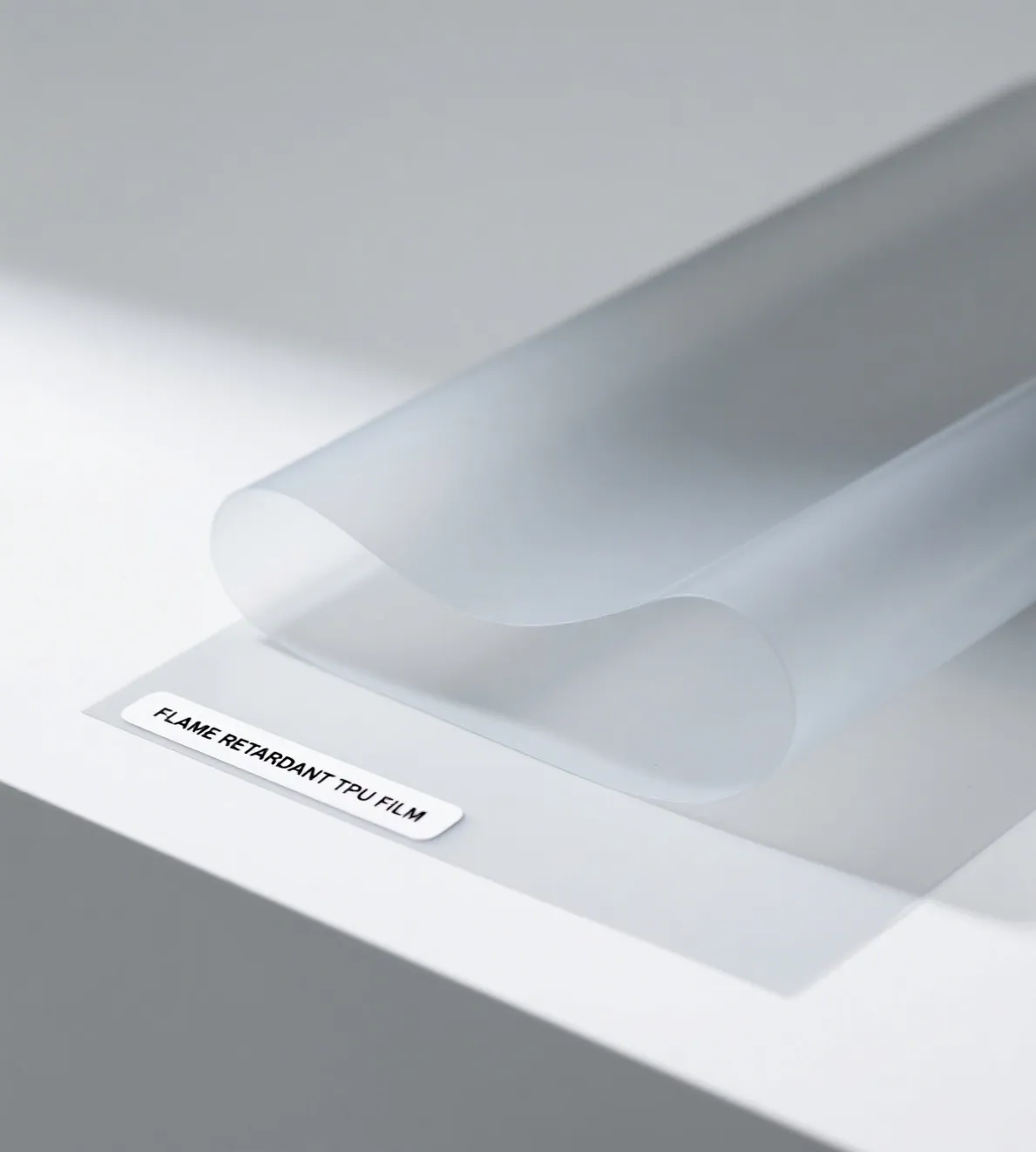
In the rapidly evolving landscape of material science, safety remains the paramount concern for engineers and manufacturers across the globe. Thermoplastic Polyurethane (TPU) has long been celebrated for its exceptional elasticity, transparency, and mechanical strength. However, in industries such as aerospace, public transportation, and electronics, basic polymer properties are insufficient. This is where the specialized flame retardant TPU film enters the spotlight. These films are engineered to resist ignition and prevent the spread of fire, providing a critical layer of protection in high-risk environments. By integrating specific chemical additives during the extrusion process, manufacturers can transform standard TPU into a fire-resistant powerhouse that meets stringent international safety regulations.
The demand for fire-resistant materials is not merely a trend but a regulatory necessity. From the interior cabins of commercial aircraft to the battery enclosures of electric vehicles, every component must contribute to the overall fire safety of the system. A high-quality flame retardant TPU film ensures that if a thermal event occurs, the material self-extinguishes rather than fueling the flames. This characteristic is vital for saving lives and protecting high-value assets. As we delve deeper into the technicalities of UL94 and V0 ratings, it becomes clear that these materials represent the pinnacle of protective film technology, balancing flexibility with uncompromising safety standards.
Understanding UL94 Standards and the V0 Rating
When discussing fire-resistant plastics, the UL94 standard is the most widely recognized benchmark. Established by Underwriters Laboratories, this test measures how a plastic material burns in various orientations and thicknesses. The classification system ranges from HB (Horizontal Burning) to V2, V1, and the most coveted V0 (Vertical Burning). For a flame retardant TPU film to achieve a V0 rating, it must pass a rigorous vertical burn test where the flaming stops within 10 seconds on a vertical specimen, and no flaming drips are allowed to ignite cotton placed beneath the sample. This is an extremely difficult standard to achieve while maintaining the characteristic flexibility and clarity of TPU.
Achieving a V0 rating means the material is suitable for the most demanding electronic and industrial applications. While V1 and V2 ratings provide some level of protection, they allow for longer burning times or the possibility of flaming drops, which could potentially spread fire to other components. In contrast, a V0-rated flame retardant TPU film provides a superior level of security. Engineers specifically look for this rating when designing components for smart cabins, high-voltage battery systems, and protective medical equipment. Understanding these nuances is essential for procurement teams who must balance cost-efficiency with the strict safety mandates of their respective industries.
The Chemistry Behind Flame Retardant TPU Film
The secret to a successful flame retardant TPU film lies in its chemical formulation. Historically, halogenated flame retardants were common, but due to environmental and toxicity concerns, the industry has shifted toward halogen-free solutions. Modern fire-resistant TPU typically utilizes phosphorus-based or nitrogen-based additives. These chemicals work by creating a "char layer" when exposed to heat. This carbonaceous layer acts as a physical barrier, insulating the underlying polymer from the heat source and cutting off the oxygen supply necessary for combustion. This process is known as intumescence, and it is the primary mechanism that allows a film to achieve a V0 rating without releasing toxic halogenated gases.
Maintaining the physical properties of the film while adding these high concentrations of flame retardants is a significant engineering challenge. Standard TPU is known for its "softness" and "stretchability," but adding solid FR powders can often make the material brittle or cloudy. Leading manufacturers use advanced molecular compounding techniques to ensure the flame retardant TPU film remains supple and easy to laminate. This ensures that the material can be used in complex 3D shapes, such as automotive seat bolsters or curved electronic displays, without cracking or losing its protective qualities over time. This balance of chemistry and mechanical performance is what differentiates premium grade films from generic alternatives.
Automotive Seat Systems and Interior Safety
The automotive industry is one of the largest consumers of high-performance films, especially with the rise of the "Smart Cabin" concept. Modern vehicles are filled with electronic sensors, heating elements, and lumbar support systems integrated directly into the seating. To ensure passenger safety, the materials used in these assemblies must meet stringent FMVSS 302 or UL94 V0 standards. Using a flame retardant TPU film within automotive seat systems provides a reliable barrier that protects the internal foam and electronic components from potential electrical shorts. Because TPU is inherently resistant to oils and grease, it also serves as a durable protective layer that extends the lifespan of the seat's internal mechanisms.
Furthermore, the shift toward electric vehicles (EVs) has placed a higher emphasis on fire containment. In an EV, the proximity of the passenger cabin to large battery arrays necessitates the use of the highest-rated fire-resistant materials. A V0-rated flame retardant TPU film is often laminated to textiles or used as a moisture barrier in seat covers to provide peace of mind. Its ability to remain flexible at low temperatures and withstand high heat without degrading makes it the ideal choice for global vehicle platforms that must operate in diverse climates. By choosing advanced TPU solutions, automotive OEMs can enhance both the comfort and the safety profile of their vehicle interiors.
Building Structures and Smart Roofing Solutions
In the architecture and construction sector, TPU films are increasingly used for roofing membranes and building envelopes. These structures are constantly exposed to the elements and potential fire hazards from external sources. The integration of a flame retardant TPU film in building structures allows architects to design lightweight, translucent roofs that are also fire-secure. Traditional PVC membranes often release harmful smoke when burned, but halogen-free TPU provides a much cleaner profile during a fire event. This makes it a preferred choice for public spaces like stadiums, airports, and shopping malls where smoke inhalation is a major concern during emergency evacuations.
Beyond simple fire resistance, these films offer excellent UV stability and weathering resistance. When used in a multi-layer lamination for roofing, the TPU layer provides the waterproof seal while the flame-retardant properties ensure compliance with building codes such as EN 13501 or ASTM E84. The versatility of the material allows it to be bonded with various fabrics like polyester or glass fiber, creating a composite material that is incredibly strong yet lightweight. This innovative use of flame retardant TPU film is helping to drive the trend toward more sustainable and safer "green" buildings across the globe.
Manufacturing Challenges and Quality Control
Producing a consistent V0-rated film requires a high degree of technical expertise and state-of-the-art manufacturing facilities. One of the primary challenges is the dispersion of flame-retardant additives within the TPU matrix. If the additives are not distributed uniformly, "hot spots" can occur where the film remains flammable, leading to failure during UL94 testing. Precision extrusion lines equipped with advanced gravimetric dosing systems are required to maintain the exact ratio of resin to additive. This level of control ensures that every square meter of the flame retardant TPU film performs exactly as specified, providing a reliable safety margin for the end-user.
Quality control does not end at the extrusion die. Rigorous testing protocols must be in place to verify the fire-retardant properties of each production batch. This includes vertical burn tests, smoke density analysis, and aging tests to ensure the FR additives do not migrate to the surface or lose efficacy over time. For industries like medical devices or semiconductor packaging, the film must also maintain high purity and low outgassing levels. Manufacturers who invest in in-house laboratory testing and third-party certifications provide a level of transparency that is crucial for high-stakes industrial applications where material failure is not an option.
Huanlong: Your Partner in High-Performance TPU Solutions
As a professional leader in the polymer industry, Huanlong specializes in the research, development, and production of high-end TPU films. With our state-of-the-art production base in Lishui, we have established ourselves as a premier supplier for global markets, providing innovative solutions for the automotive, medical, and industrial sectors. Our commitment to quality is reflected in our advanced manufacturing processes, ensuring that every roll of flame retardant TPU film we produce meets the most stringent international safety standards, including UL94 V0 and V2 ratings.
What sets Huanlong apart is our focus on vertical integration and customized material science. Whether you are looking for aliphatic TPU for premium paint protection films or breathable membranes for medical protective gear, our engineering team works closely with clients to develop tailored formulations. Our flame retardant TPU film products are specifically optimized for lamination with textiles, making them ideal for automotive comfort seat systems and smart roofing membranes. We pride ourselves on our ability to balance extreme fire safety with the aesthetic and mechanical requirements of modern design.
Why Choose Huanlong?
Expertise: Over a decade of experience in specialized TPU extrusion and compounding.
Innovation: Industry-leading halogen-free flame retardant technology.
Versatility: Applications spanning from medical grade films to automotive smart cabins.
Reliability: Strict quality control and international certifications for global compliance.
Conclusion: The Future of Fire-Resistant Polymers
The integration of fire safety standards into polymer design is no longer an optional luxury; it is a fundamental requirement of modern engineering. The development of UL94 V0 rated flame retardant TPU film has opened new doors for designers in the automotive, construction, and electronics sectors, allowing for the creation of products that are both high-performing and incredibly safe. As technology continues to advance, we can expect even more sophisticated flame-retardant solutions that offer better environmental profiles and even greater mechanical durability. By staying informed about these standards and selecting the right material partners, businesses can ensure they stay ahead of regulatory changes and market expectations.
Ultimately, the choice of material reflects a company's commitment to quality and passenger or user safety. A high-quality flame retardant TPU film provides a hidden but essential shield that functions perfectly under pressure. Whether it is protecting the intricate wiring of a smart vehicle or ensuring the structural integrity of a massive architectural membrane, these specialized films are the silent guardians of the modern industrial world. As we look toward a future defined by electrification and smarter infrastructure, the role of V0-rated TPU will only continue to grow in importance.
Frequently Asked Questions
Q1: What exactly makes a flame retardant TPU film V0 rated?
A V0 rating is achieved when a material passes the UL94 vertical burn test with the highest performance. Specifically, the flame must extinguish within 10 seconds, and the material must not produce any flaming drips that could ignite a cotton indicator. This ensures the film provides the maximum level of fire protection in vertical applications.
Q2: Can flame retardant TPU film be used in outdoor environments?
Yes, especially if formulated as an aliphatic TPU. These films are engineered to resist UV radiation and yellowing while maintaining their fire-retardant properties. This makes them ideal for smart roofing membranes, building structures, and outdoor electronic enclosures where both weather resistance and fire safety are required.
Q3: Are the chemicals in flame retardant TPU film toxic?
Modern high-performance films, such as those produced by Huanlong, utilize halogen-free flame retardant (HFFR) technology. These phosphorus and nitrogen-based additives are much safer for the environment and do not release toxic halogenated gases (like chlorine or bromine) during a fire, making them suitable for use in enclosed spaces like vehicles and hospitals.
Q4: How does the addition of flame retardants affect the flexibility of the film?
While adding large amounts of additives can potentially make polymers stiffer, advanced compounding techniques allow manufacturers to maintain a high degree of elasticity. A premium flame retardant TPU film will still offer excellent elongation and "hand-feel," making it suitable for lamination with fabrics in automotive seating and wearable technology.
Q5: Is it possible to get a transparent flame retardant TPU film?
Achieving full transparency in a V0-rated film is a significant challenge because many fire-retardant additives are opaque. However, through nanotechnology and specialized additive selection, it is possible to produce semi-transparent or highly translucent films that meet fire safety standards while allowing light transmission for specific industrial needs.
Ready to Enhance Your Product Safety?
Contact the experts at Huanlong today for customized samples and technical consultations on our V0-rated films.