
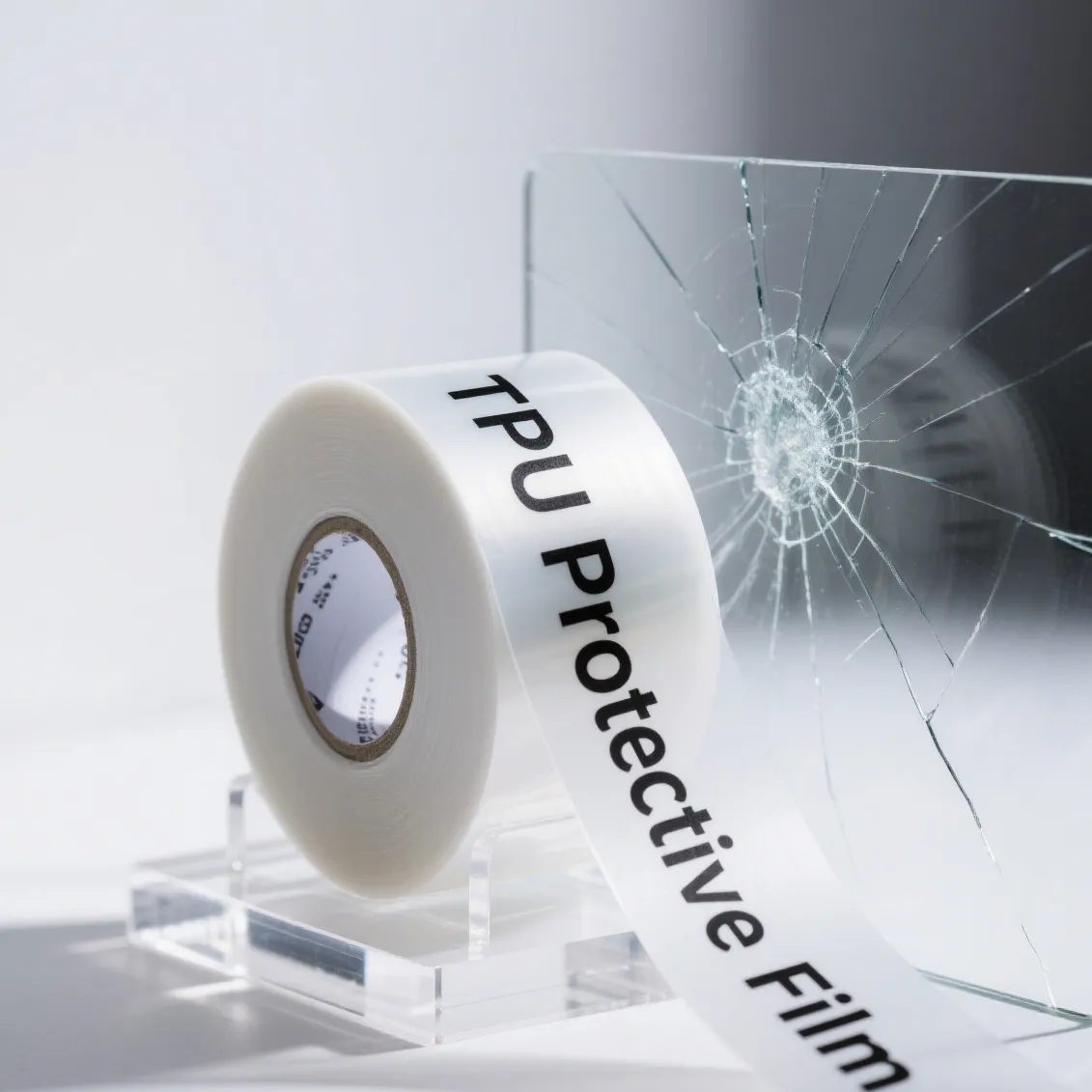
Tpu paint protection film for headlights is a small application with an unusually difficult set of requirements. A headlight lens is a transparent polymer component that runs hot, sits at the very front of the vehicle where every stone arrives, and is judged by how clear it looks rather than by how well it survives. Any film that solves the impact problem while reducing light output or clarity has failed at its main job.
This article looks at what actually happens to a headlight in service, how a protection film should be specified for that environment, and where the common installation mistakes come from.
The Heat Problem Comes From Inside
A headlight lens is heated from behind by its own light source and from the front by the sun. Modern projector and matrix units concentrate significant energy into a small area of the lens, so a film applied over the hottest zone experiences a sustained elevated temperature that a film on a bonnet never sees. That matters because adhesives soften with heat, and a softened adhesive under a stretched film will creep.
The practical consequence is that a headlight film has to be specified for thermal stability as much as for impact resistance. Where a film is stretched tightly around a curved lens during installation and then repeatedly warmed by the lamp, the stored stress has nowhere to go except into the adhesive layer. Films with a wider thermal tolerance and more stable adhesive chemistry hold their shape in that condition; softer or more heavily plasticised films do not.
What Tpu Paint Protection Film for Headlights Has to Deliver
- Optical clarity. Any haze, texture or colour shift is visible at night as scattered light, so the film's transparency is a safety parameter rather than a cosmetic one.
- Impact absorption. The lens is the first surface to meet road debris, and unlike painted steel it cannot be repaired invisibly once cracked.
- Thermal stability. The film and its adhesive must tolerate continuous heat cycling without creeping, lifting or clouding.
- Safe removal. Lenses are expensive and their coatings are delicate, so the film must come off without pulling the lens surface with it.
| Observed Problem | Underlying Cause | Where to Look First |
|---|---|---|
| Edge lifting over the hot zone | Adhesive creep under sustained heat plus stored film stress | Adhesive family and how much the film was stretched at installation |
| Haze or light scattering at night | Surface texture, contamination or a film with lower optical grade | Film grade and installation cleanliness |
| Film punctured by a stone | Impact energy beyond the thickness selected | Thickness and the exposure profile of the vehicle |
| Yellowing after a few summers | Base polymer chemistry and ultraviolet package | Whether an aliphatic polyurethane was specified |
| Coating damage on removal | Adhesive too aggressive for the lens coating | Removal route and adhesive selection |
The yellowing row deserves emphasis. Headlights are the component where a colour shift is most obvious to an owner, because a yellowed lens changes the appearance of the whole front of the car and is immediately compared with the other side. That is why the polymer family matters more here than on a painted panel, where a slight shift blends into the surrounding colour.
Thickness Is Chosen Against the Exposure
A headlight film that is too thin will be penetrated by the first significant stone at motorway speed, and one that is too thick will be difficult to conform around the lens curvature and may slightly reduce light transmission. The useful range is narrow, and it depends on where the vehicle is driven and how exposed the lamps are.
Vehicles with deeply recessed lamps behind a grille or bumper need less protection than those with exposed units set into a smooth nose. Track use and frequent motorway driving both raise the impact energy. Rather than quoting a single recommendation, the sensible approach is to describe the vehicle and the driving environment, then let the film maker propose a thickness and a polymer family to match.
A headlight film specification should state:
• The polymer family, because it governs yellowing resistance.
• The thickness, chosen for the exposure rather than by habit.
• The adhesive type and the intended removal route.
• The clarity requirement, expressed as transmission rather than as a claim.
Where Installations Go Wrong
Headlight film is a small job that is often treated as an easy one, which is precisely why it produces a disproportionate share of complaints. The four steps below are where the outcomes are decided.
- Cleaning without damaging the lens coating. Many modern lenses carry a hard coat that is easily abraded by an aggressive pad, and the damage is irreversible. Clean chemically first and mechanically only if necessary.
- Avoiding excessive stretch. Over-stretching to make a curved lens fit stores stress that heat will later release, and the film will lift from the middle of the panel rather than at a trim line.
- Post-heating the perimeter evenly. A localised hot spot can distort the lens underneath, so heat should be applied across the film with movement rather than held in one place.
- Recording the removal plan. Note the adhesive used and the date, so that whoever removes the film years later knows what they are dealing with.
Lens replacement is expensive enough that the cost of a careful installation is trivial by comparison. That asymmetry is the argument for treating headlight film as a precision application rather than as a quick add-on at the end of a larger job.
It is worth saying something about maintenance as well, because headlights are washed more aggressively than most panels. A film that is fine under a gentle hand wash can be dulled by a brush at a service station, and repeated contact with a dry cloth gradually introduces the very fine scratching that shows up as glare at night. Treating the filmed lens like a painted panel, using a clean mitt and plenty of lubricant, keeps the clarity that the specification was chosen to deliver. Customers who are told this at handover almost never come back with a complaint about hazy lights.
Where the Film Comes From
Optical clarity and heat resistance are formulated properties, so the specification conversation belongs with the manufacturer. Zhejiang Huanlong has produced functional films since 2007 across three production bases in Zhejiang, with blown film, extrusion and foaming lines, two research centres and more than thirty engineers, which makes it possible to supply a lighting-grade film rather than a general purpose one.
Our protection film range is described on the tpu paint protection film page, and the corresponding product specification is listed under automotive paint protection film. A Huanlong engineer can also advise on thickness for a specific lamp geometry, which is usually the difference between a clear result and a compromised one.
Frequently Asked Questions About Tpu Paint Protection Film for Headlights
Q1. Does film over a headlight reduce light output?
A clean, optically clear film has a negligible effect on transmitted light, and many drivers notice nothing at all. The measurable loss comes from haze, contamination or a poor quality film rather than from the presence of a film as such. Ask for transmission data rather than accepting a general statement.
Q2. Can film be applied to a headlight that is already hazy?
It can, but it will not correct the haze, and it may make the defect more noticeable because the film adds a uniform surface over an uneven one. Restore the lens first if the haze is on the surface, or accept that the film will preserve rather than improve the appearance.
Q3. Which lamps run hottest, and does that change the film?
Compact projector units and high-output LED arrays concentrate heat in a smaller area than large reflector housings, so the local temperature at the lens can be higher even when total power is similar. Where that is the case, prioritise thermal stability in the adhesive and avoid over-stretched installation.
Q4. How is the film removed later?
By warming the film gently to soften the adhesive and peeling it back at a shallow angle, then removing any residue with a suitable solvent. Force and heat should both be applied moderately, because the lens coating underneath is the component at risk if either is excessive.
Q5. What should the supplier be able to document?
The polymer family, the optical transmission, the recommended thickness for the application, and the certifications the maker holds. Zhejiang Huanlong is certified to OEKO-TEX® 100, Bluesign®, GRS and ISO 9001:2015 along with ISO 14001 and ISO 45001. Where a customer programme needs extra test standards, request the report for the batch concerned.
A headlight is the one panel on a car that has to be clear, hot and exposed all at once, which is why it separates careful specifications from convenient ones. Choose the polymer for colour stability, the thickness for the real exposure, and the adhesive for a safe removal years later, and tpu paint protection film for headlights will do exactly what it is supposed to do.