
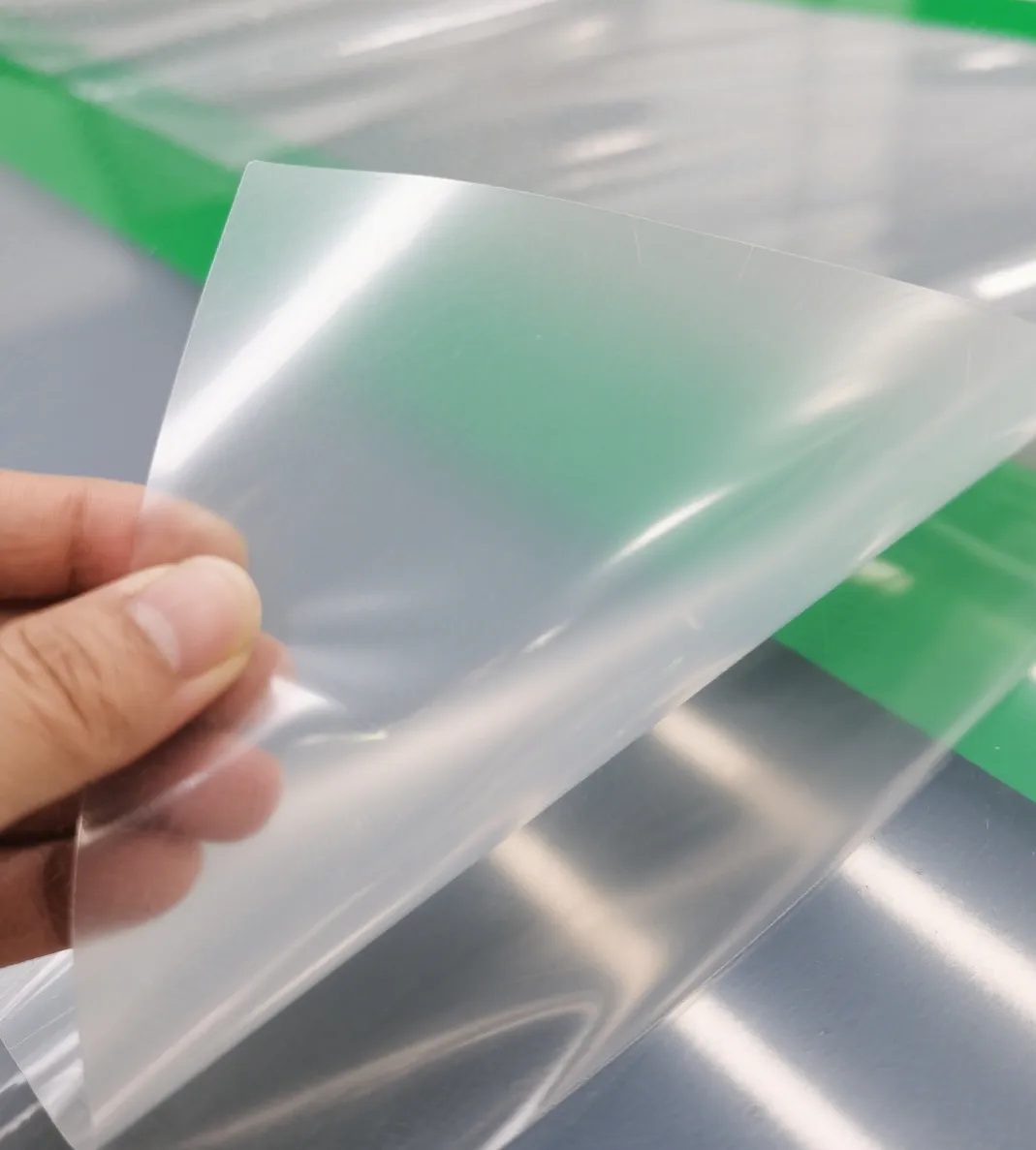
Biodegradable tpu film for agricultural mulching is a ground-covering material designed to break down in the soil after the growing season, removing the collection step that conventional plastic mulch creates. It matters because the disposal of used mulch film has become one of the least pleasant jobs on a farm: it is slow, it is partial, and the fragments left behind contaminate the field for years.
Most growers who look into degradable mulch have already tried the alternatives. They have run conventional film and paid for removal, they have tried paper and watched it fail after rain, and they have used straw and found it inconsistent. What they want is a material that performs like film during the season and then stops existing afterwards, without a collection crew.
What Biodegradable Tpu Film for Agricultural Mulching Has to Do
The material has to hold up under conditions that are hostile to thin polymer. It is laid over rough soil, it is walked on, it is exposed to UV at full intensity for months, and it is expected to keep suppressing weeds and conserving moisture throughout. Any tear that opens up early becomes a weed patch, and a weed patch in the row is worse than no mulch at all.
At the same time it has to reach its end of life in a predictable way. A material that degrades too quickly fails during the season; one that degrades too slowly means the farmer is still pulling fragments out of the field, which defeats the purpose. The useful framing is not whether a film is degradable but whether its degradation profile matches the crop cycle it will cover.
Soil conditions decide how that profile plays out. Temperature, moisture, microbial activity and pH all influence how quickly a degradable material is consumed, which means the same film can behave differently on two farms a hundred kilometres apart. Any specification conversation should therefore start with the field, not with the roll.
Where Mulch Film Decisions Usually Go Wrong
- Matching the wrong crop cycle. A film chosen for a short season will not survive a long one, and the failure appears exactly when the crop needs cover most.
- Ignoring installation tension. Film laid too loose flaps and tears; film laid too tight tears at the anchor points instead.
- Forgetting the soil surface. Clods and stubble puncture thin material from below, long before UV has done any work.
- Treating certification as a formality. Claims about compostability and biodegradation should be verified against the documentation behind them, not taken from a label.
| Growing Situation | What the Cover Must Do | Practical Consideration |
|---|---|---|
| Short-season vegetables | Fast, complete breakdown after harvest | Warm, moist soil accelerates degradation |
| Long-season field crops | Hold for months of UV and weather | Thicker build and slower profile required |
| Dryland and low-rainfall sites | Moisture conservation is the main benefit | Slower degradation where soil stays dry |
| Organic and certified production | Inputs must satisfy the certifier | Documentation matters as much as performance |
| High-value horticulture | Clean rows and predictable timing | Failure cost far exceeds material cost |
Working down that table with a grower's own calendar is more useful than any general claim, because the same product can be the right answer on one site and the wrong one on the next farm along the road.
What degradable mulch changes on a working farm:
• No collection crew, no hauling, no tipping charges at the end of the season.
• Fewer fragments left in the soil to interfere with the next planting.
• A field that goes into the next crop without a film removal operation.
• Documentation that supports organic and sustainability claims.
Testing a Degradable Film on Your Own Soil
Because soil biology drives the outcome, a field trial is the only honest way to evaluate a degradable mulch. A strip trial in one corner of a field is enough to answer the questions that matter, and it costs a season rather than a lot of money. What the trial is really measuring is not whether the material disappears, but whether it disappears at the right time.
- Record the soil temperature range. Soil temperature is the strongest single driver, and it varies more across a farm than growers expect.
- Prepare the bed as you would normally. A trial run on stone-free, finely worked soil flatters any film and tells you nothing about your real conditions.
- Inspect weekly, not monthly. The interesting information is in the weeks where the film starts to break down, not in its condition on day one.
- Photograph the same marked points. A fixed reference point turns opinion into evidence at the end of the season.
Working With a Film Manufacturer on Agricultural Projects
Degradable mulch is a formulation question, and the answer depends on where it will be used. A maker who controls the recipe can adjust a degradation profile to a crop calendar, while an importer can only offer what happens to be in the warehouse. Zhejiang Huanlong has produced functional films since 2007 and holds OEKO-TEX® 100, Bluesign®, GRS, ISO 9001:2015, ISO 14001 and ISO 45001, which is the documentation base an agricultural buyer needs when a certifier or a retailer asks questions.
The material family is described on the biodegradable tpu film page, and related applications across packaging, textiles and outdoor use sit under film solutions. Huanlong works with growers and distributors on a specification-first basis, which for mulch means starting from the crop calendar and the soil rather than from a stock width.
Where Degradable Mulch Fits in a Rotation
The strongest case for degradable cover is usually found in the fields with the worst removal economics. Where a crop is followed immediately by another planting, a collection operation delays the next cycle and competes for the same labour that should be drilling or transplanting. That is the situation where a material that finishes its life in the soil pays for itself, because the saving is a labour window rather than a material saving.
Conversely, on fields where film is removed cleanly and quickly by an established crew, the arithmetic is far less favourable, and it is worth saying so rather than pushing a degradable product into a situation that does not need it. A supplier who tells you where their material does not fit is more useful than one who tells you it fits everywhere, and the honest answer varies by field within the same farm.
Rotation planning also affects the next crop. A degradable cover that breaks down slowly may still be present when the following crop is established, and roots developing through fragments behave differently from roots in clean soil. Placing degradable mulch in front of a long-established crop rather than a delicate seedling is a planning decision that costs nothing and removes a category of risk.
Frequently Asked Questions About Biodegradable Tpu Film for Agricultural Mulching
Q1. Will biodegradable tpu film for agricultural mulching last a whole season?
That is a design choice rather than a fixed property, which is why the crop calendar comes first in the specification. Tell the maker the number of weeks the cover has to perform and the soil conditions it will meet, and the profile can be matched to that window instead of being guessed.
Q2. Does the film leave anything behind in the soil?
The intent of a degradable mulch is that breakdown products are consumed in the soil, and how completely that happens depends on the material and the site. Ask for the certification documentation behind the claim, and run a strip trial on your own field so you can judge the residue with your own eyes.
Q3. Can it be laid with my existing mulch layer?
In most cases yes, although tension settings usually need adjusting because degradable material behaves differently from conventional film. Run a short length through the machine before the season starts and check how the film sits after an hour, rather than discovering the right setting in the middle of planting.
Q4. Is degradable mulch suitable for organic certification?
Positions differ between certifiers and regions, so the question should be answered by your certifier using the documentation your supplier provides. What a manufacturer can do is supply the compliance papers, and a maker with a documented quality system is far easier to work with than one who can only offer a product label.
Q5. What should a grower or distributor send in an enquiry?
The crop, the number of weeks of cover required, the bed width, the soil type and the climate are enough for a first recommendation. Zhejiang Huanlong manufactures rather than trades, so the degradation profile can be set for the site and repeated for the following season.
Mulch is one of the few inputs a grower buys that ends up being a disposal problem, and that is the part degradable material removes. Match the profile to the calendar, trial it in your own soil, and confirm the paperwork before the season rather than after it. Chosen that way, biodegradable tpu film for agricultural mulching is not only a sustainability story, it is one less operation at the busiest time of year.