
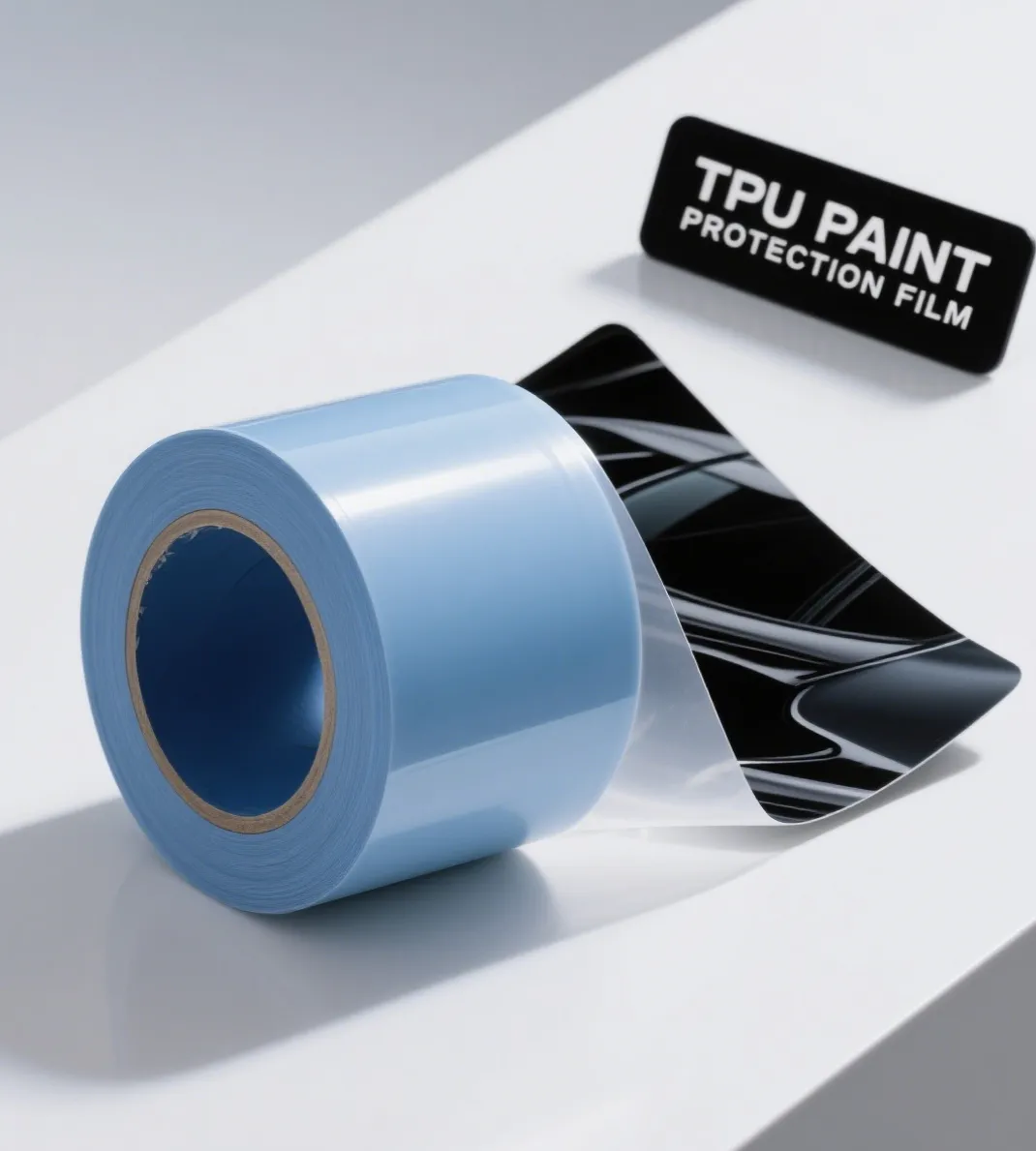
A comprehensive guide to understanding the technology, benefits, and industry standards of premium automotive protection.
In the realm of high-end automotive care, the preservation of a vehicle's original factory paint is not merely a matter of aesthetics but a significant factor in maintaining its long-term value. Owners of luxury vehicles demand the highest level of defense against road debris, environmental contaminants, and minor abrasions. This is where TPU paint protection film emerges as the definitive solution. Unlike traditional waxes or ceramic coatings, this advanced thermoplastic polyurethane layer provides a physical barrier that is both transparent and incredibly resilient. As the automotive industry evolves, the demand for sophisticated protection has led to the development of films that can literally heal themselves from scratches, ensuring that a vehicle looks showroom-ready for years. This guide explores the intricate science and practical advantages of choosing high-quality film for your automotive investments.
The adoption of TPU paint protection film has revolutionized how we perceive car maintenance. In the past, stone chips and swirl marks were considered unavoidable battle scars of daily driving. However, the introduction of thermoplastic polyurethane (TPU) shifted the paradigm. This material is uniquely characterized by its elasticity, transparency, and resistance to oils and grease. For luxury car enthusiasts, the primary appeal lies in the film's ability to absorb impacts that would otherwise cause permanent damage to the clear coat. By integrating this technology, manufacturers like Huanlong have provided a way to encapsulate beauty and durability within a single, high-performance product.
The Technological Evolution from PVC to TPU
Understanding the superiority of TPU paint protection film requires a look back at the history of paint protection. Early iterations of clear bras were often made from Polyvinyl Chloride (PVC). While PVC provided a basic layer of protection, it was plagued by several issues: it was stiff, difficult to install on complex curves, and prone to yellowing and cracking under UV exposure within a short period. As luxury vehicles became more aerodynamically complex with sharper angles and deeper curves, the limitations of PVC became a deal-breaker for professional installers and car owners alike. The transition to TPU represented a massive leap in material science, offering a flexible and stable alternative that could conform to any surface without losing its structural integrity.
Modern TPU paint protection film is engineered at a molecular level to be far more durable than its predecessors. The aliphatic polyurethane used in premium films ensures that the material remains optically clear even after years of exposure to intense sunlight. This is a critical distinction, as lower-grade films (aromatic TPU) may still yellow over time. For a luxury vehicle, where the depth and clarity of the paint are paramount, only the highest grade of aliphatic TPU is acceptable. This evolution ensures that the protection does not become an eyesore itself, but rather an invisible shield that enhances the vehicle's natural brilliance while offering unprecedented resistance to the elements.
The Chemistry Behind Self-Healing Properties
Perhaps the most remarkable feature of TPU paint protection film is its self-healing capability. This is not magic, but rather a sophisticated application of polymer chemistry. The top layer of a high-quality TPU film consists of a high-density, cross-linked polymer coating. When this surface is scratched or marred by light abrasions, the molecules are displaced but not destroyed. When heat is applied—either from the sun's natural warmth, warm water, or a heat gun—the polymer chains return to their original, lowest-energy state. This causes the scratch to "vanish" as the surface levels itself out again. This property is essential for maintaining a flawless finish on luxury vehicles that are frequently driven.
Beyond just healing, the structure of TPU paint protection film provides exceptional impact dissipation. When a stone hits the film at high speed, the thermoplastic layer acts as a shock absorber. It compresses and spreads the force of the impact across a wider area, preventing the energy from reaching the brittle paint underneath. Once the pressure is released, the film returns to its original shape. This combination of "memory" and "elasticity" is what sets TPU apart from any other protective medium. It is an active protection system that works continuously to defend the vehicle from the rigors of the road while maintaining its own integrity through the self-healing process.
Environmental Resilience and Chemical Stability
Luxury vehicles are exposed to a variety of harsh chemical and environmental threats every day. From acidic bird droppings and tree sap to road salt and industrial fallout, the environment is constantly trying to degrade the vehicle's finish. A premium TPU paint protection film acts as a sacrificial barrier that is highly resistant to chemical etching. The non-porous nature of the topcoat prevents these contaminants from penetrating the film and reaching the paint. This means that instead of a permanent stain on your car's hood, the contaminant sits on top of the film and can be easily washed away during routine maintenance.
In addition to chemical resistance, the UV stability of TPU paint protection film is a vital component of its performance. Long-term exposure to ultraviolet radiation can cause paint to fade and clear coats to oxidize. High-quality TPU films are infused with UV inhibitors that protect both the film itself and the paint underneath. This ensures that the protected panels do not age differently than the rest of the vehicle. For owners of luxury cars in high-heat climates, this UV protection is indispensable for preserving the "new car" look for the duration of ownership. The stability of the material ensures it won't become brittle or lose its clarity even after years of standing in the sun.
Aesthetics: High Gloss and Hydrophobic Excellence
While protection is the primary goal, the aesthetic enhancement provided by TPU paint protection film cannot be ignored. Modern films are designed to have a high refractive index, which actually increases the depth and gloss of the paint. For luxury vehicles with metallic or pearlescent finishes, the film can make the colors pop more vividly than the factory finish alone. Furthermore, many premium films now include integrated hydrophobic properties. This means the surface repels water, dust, and dirt much like a high-end ceramic coating. Water beads up and rolls off, carrying surface contaminants with it, which makes the cleaning process significantly easier and reduces the frequency of washes.
The "invisible" nature of professional-grade TPU paint protection film is one of its greatest selling points. When installed correctly by a skilled technician, the film follows the body lines so closely that it is nearly impossible to detect. Edges are often tucked behind panels to ensure there are no visible seams. This allows the design language of the luxury vehicle to remain the star of the show, while the film works silently in the background. Whether the car has a high-gloss finish or a modern matte/satin look, there is a TPU film designed to match and protect that specific texture without altering its intended appearance.
Professional Installation and Maintenance Insights
The performance of any TPU paint protection film is heavily dependent on the quality of the installation. For luxury vehicles, this often involves a combination of precision pre-cut templates and custom hand-trimming for perfect coverage. A professional installer ensures that the surface is perfectly decontaminated before application, preventing any dust or fibers from being trapped under the film. The use of high-quality slip solutions and specialized squeegees allows for a bubble-free finish that adheres perfectly to every contour. It is this attention to detail that separates a standard wrap from a premium protection service.
Maintaining your film is straightforward but requires adherence to certain best practices. While the TPU paint protection film is incredibly durable, it is recommended to avoid high-pressure washes too close to the edges and to use pH-neutral soaps. Regular maintenance with dedicated film sealants can further extend the life of the hydrophobic topcoat and keep the self-healing properties active. By following these simple steps, luxury car owners can ensure that their investment remains protected for 7 to 10 years, providing a massive return on investment when it comes time for resale or trade-in.
Huanlong: Setting the Standard in TPU Innovation
At Huanlong, we specialize in the advanced manufacturing of high-performance thermoplastic polyurethane solutions. Our expertise spans across multiple industries, from medical-grade films to functional textiles, but our contribution to the automotive sector remains a cornerstone of our innovation. We understand that a TPU paint protection film is only as good as its base material. That is why we utilize state-of-the-art aliphatic TPU base films that offer industry-leading clarity, stretchability, and UV resistance.
Our Lishui production base is equipped with cutting-edge technology to ensure that every roll of film meets rigorous quality control standards. Huanlong's advantages lie in our deep R&D capabilities and our commitment to sustainability. We provide a diverse product range, including high-breathable films, industrial-strength membranes, and our premium automotive series. When you choose Huanlong, you are choosing a partner dedicated to technical excellence and the long-term protection of your most valuable assets. Our films are engineered to perform in the harshest conditions, ensuring that your luxury vehicle remains pristine regardless of where the road takes you.
Why Choose Huanlong Products?
High-grade aliphatic TPU base film for maximum longevity.
Advanced self-healing technology for scratch resistance.
Superior optical clarity that enhances vehicle aesthetics.
Proven performance in global automotive and industrial markets.
Conclusion
Investing in TPU paint protection film is the single most effective step you can take to preserve the beauty and value of your luxury vehicle. With its unique self-healing properties, chemical resistance, and high-gloss finish, it provides peace of mind for every mile driven. As technology continues to advance, manufacturers like Huanlong remain at the forefront, providing the essential materials that protect the cars of today and tomorrow.
Contact Us for Premium TPU SolutionsFrequently Asked Questions
Q1: How long does TPU paint protection film usually last?
A high-quality TPU paint protection film typically lasts between 7 to 10 years, depending on the environmental conditions and how well the vehicle is maintained. Premium aliphatic films from Huanlong are designed to resist yellowing and degradation for the long haul.
Q2: Can I apply wax over my TPU paint protection film?
While you can apply certain waxes, it is generally recommended to use specialized sealants designed for TPU paint protection film. Avoid waxes that contain dyes or harsh abrasives, as these can interfere with the film's self-healing topcoat.
Q3: Does TPU paint protection film really heal itself from scratches?
Yes, TPU paint protection film features a self-healing topcoat. When the film is subjected to heat (sunlight or warm water), the polymer structure realigns to its original flat state, effectively eliminating light scratches and swirl marks.
Q4: Is the installation of TPU paint protection film reversible?
Absolutely. One of the main benefits of TPU paint protection film is that it can be safely removed without damaging the original factory paint. In many cases, it leaves the paint underneath looking exactly as it did the day the film was applied.
Q5: How does TPU paint protection film compare to ceramic coatings?
While ceramic coatings provide excellent chemical resistance and gloss, they cannot protect against physical impacts like stone chips. TPU paint protection film provides a much thicker physical barrier, making it superior for impact protection, while modern films also offer the hydrophobic benefits of a coating.