
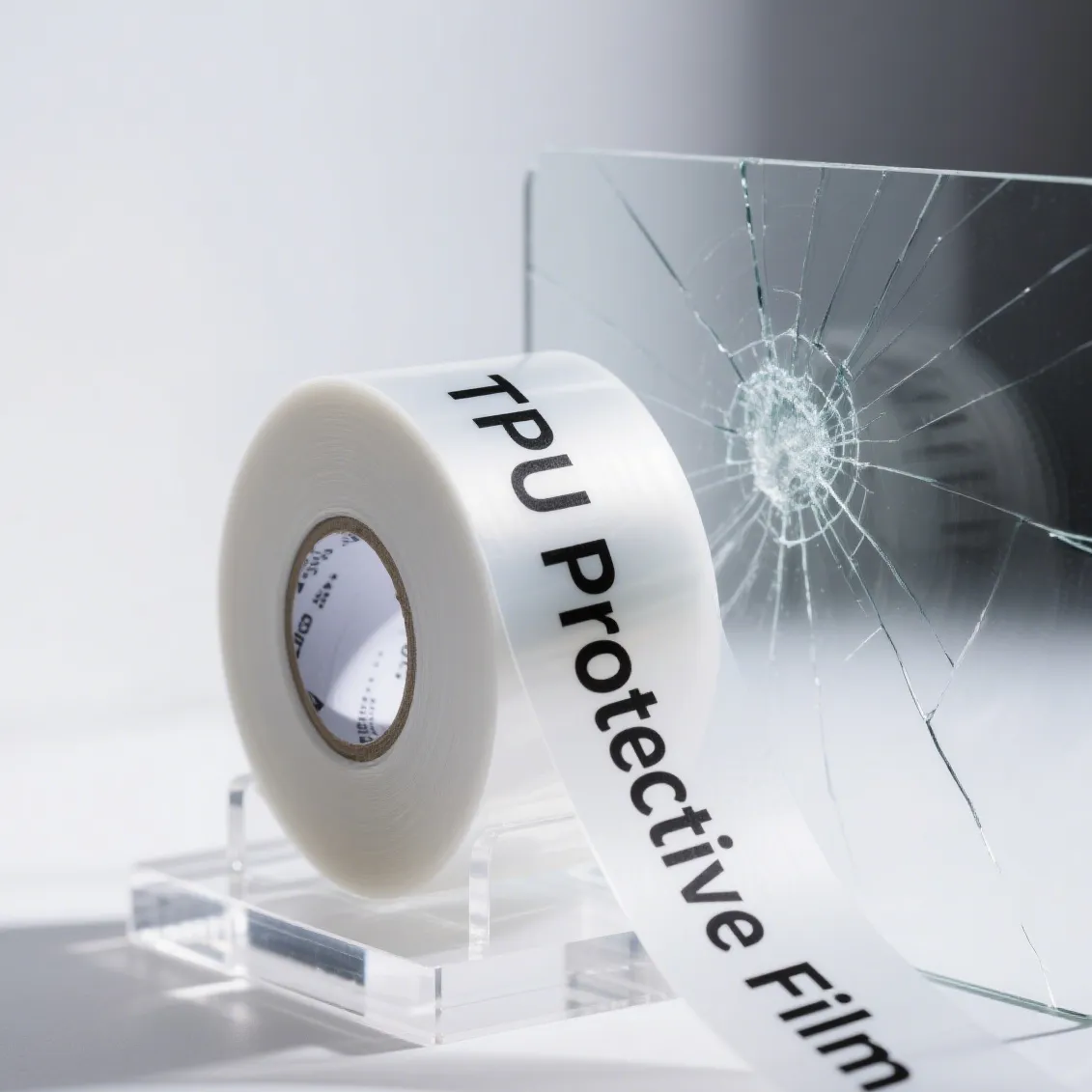
In the modern manufacturing landscape, the demand for versatile surface protection has never been higher. A high-quality TPU protective film serves as a critical barrier against environmental degradation, mechanical wear, and chemical exposure, especially when dealing with intricate geometries and curved surfaces.
Introduction to Advanced Surface Protection
Surface protection is no longer just about covering a flat sheet of metal or plastic. Today's industrial components—ranging from automotive body panels to wearable medical devices—feature complex curves, deep recesses, and sharp angles. Traditional protective materials often fail in these scenarios, leading to peeling, bubbling, or incomplete coverage. This is where the unique properties of Thermoplastic Polyurethane (TPU) become indispensable.
As a global leader in polymer technology, Huanlong has pioneered the development of specialized films that combine elasticity with extreme durability. Our focus on complex surface applications ensures that every contour is shielded without compromising the aesthetic or functional integrity of the substrate. By utilizing premium raw materials and advanced extrusion processes, we provide solutions that redefine the standards of modern surface preservation.
In this guide, we will explore why TPU is the superior choice for challenging applications, how it compares to alternative materials, and why choosing the right partner for your material needs is essential for long-term success.
The Science Behind TPU Protective Film Flexibility
The secret to the performance of a TPU protective film lies in its molecular structure. TPU is a block copolymer consisting of alternating sequences of hard and soft segments. The hard segments provide structural integrity and resistance to mechanical impact, while the soft segments grant the material its characteristic elasticity and flexibility.
When applied to a complex surface, the film must undergo significant elongation without losing its protective qualities. High-quality TPU can often stretch up to 300% to 500% of its original length. This "memory" effect allows the film to wrap around spherical or irregular shapes tightly, ensuring a seamless fit that resists edge lifting. Furthermore, the optical clarity of TPU ensures that the underlying design of the product remains visible and vibrant.
Huanlong's proprietary formulations enhance these natural characteristics by adding UV stabilizers and anti-yellowing agents. This ensures that even under harsh sunlight or extreme weather conditions, the film remains transparent and flexible. For industries such as automotive interiors and outdoor equipment, this balance of physical toughness and chemical stability is non-negotiable.
Comparing Protective Film Materials
To understand why TPU is preferred for complex surfaces, it is helpful to compare it with other common protective materials like PVC (Polyvinyl Chloride) and PET (Polyethylene Terephthalate).
| Feature | TPU Protective Film | PVC Film | PET Film |
|---|---|---|---|
| Flexibility | Excellent (High Elongation) | Moderate (Becomes Brittle) | Low (Rigid) |
| Self-Healing | Yes (Thermal Activation) | No | No |
| UV Resistance | High (Non-Yellowing) | Low (Yellows quickly) | High |
| Environmental Impact | Recyclable & Eco-friendly | Low (Contains Phthalates) | Recyclable |
As shown in the table, TPU offers a superior combination of flexibility and self-healing properties, making it the ideal candidate for custom protection solutions where durability is as important as aesthetics.
Industry Applications for Flexible TPU
The versatility of TPU allows it to cross into multiple high-stakes industries. In the automotive sector, it is the primary material for Paint Protection Film (PPF). Modern cars feature aerodynamic shapes that require the film to stretch around mirrors, bumpers, and door handles effortlessly. Beyond the exterior, TPU is increasingly used in automotive seating systems to provide moisture barriers and soft-touch textures.
In the medical field, the biocompatibility of TPU is a major advantage. It is used in medical film applications for wound dressings and surgical drapes. These applications require a film that can conform to the human body's contours while remaining breathable and waterproof. Our high-vapor transmission films allow the skin to breathe while preventing liquid contaminants from entering.
The electronics and semiconductor industries also benefit from TPU's properties. Delicate components often require protection during transport or assembly. A flexible TPU layer can absorb micro-vibrations and prevent static discharge, protecting sensitive circuits in semiconductor manufacturing environments. Whether it is a smartphone screen or a large industrial control panel, TPU provides a nearly invisible yet incredibly tough shield.
Why Choose Huanlong for Your TPU Solutions
When selecting a supplier for protective films, expertise and technical support are paramount. Huanlong is not just a manufacturer; we are a strategic partner committed to innovation. Our production facilities utilize state-of-the-art extrusion technology to ensure consistent thickness and quality across every roll of film. We understand that complex surface applications require more than just a standard product; they require a solution tailored to specific mechanical stresses and environmental factors.
Our competitive advantages include:
- Vertical Integration: We control the entire process from raw material formulation to final film coating.
- Advanced R&D: We continuously develop high breathable TPU and other functional films to meet evolving market demands.
- Customization: We offer a wide range of thicknesses, widths, and surface finishes (gloss, matte, or textured).
- Sustainability: Our TPU materials are designed to be recyclable, supporting global efforts for a circular economy.
From outdoor gear to high-tech new energy applications, our products are tested to withstand the most rigorous conditions. We pride ourselves on our ability to solve complex protection challenges that others cannot.
Strategic Advice for Applying TPU Protective Film
Achieving a perfect application on a complex surface requires both the right material and the right technique. First, surface preparation is critical. Any dust, oil, or residue can compromise the adhesive bond, leading to premature failure. We recommend using specialized cleaning agents that do not leave a film behind.
Secondly, consider the installation environment. Temperature and humidity play a significant role in how a TPU protective film behaves during application. Moderate temperatures help maintain the film's elasticity without making it too soft to handle. For extremely complex curves, professional installers often use heat guns to gently warm the film, making it more pliable and allowing it to conform to deep recesses without tension-induced lifting later on.
Finally, choose the right adhesive system. At Huanlong, we offer various adhesive options tailored to different substrates, whether you are applying the film to painted metal, polycarbonate, or carbon fiber. A well-matched adhesive ensures that the film stays in place for years but can still be removed cleanly when it is time for a replacement.
Final Thoughts on Surface Preservation
As industrial designs become more sophisticated, the role of flexible protective materials becomes more vital. The TPU protective film has proven itself to be the gold standard for versatility, durability, and aesthetic performance. By choosing high-quality TPU from a trusted manufacturer like Huanlong, businesses can significantly extend the lifespan of their products, reduce maintenance costs, and enhance the end-user experience.
Whether you are protecting a high-performance vehicle, a lifesaving medical device, or a sustainable energy component, the right film makes all the difference. We invite you to explore our full range of TPU products and discover how we can help you achieve superior protection for your most complex surface applications.
Frequently Asked Questions
Q1: How long does a TPU protective film typically last on a complex surface?
Under normal conditions, a high-quality TPU film can last between 5 to 10 years. Factors such as exposure to extreme UV radiation, harsh chemicals, and mechanical abrasion will influence this lifespan. Huanlong films are engineered with advanced stabilizers to maximize longevity even in challenging environments.
Q2: Can TPU protective film be applied to textured surfaces?
Yes, TPU is flexible enough to conform to lightly textured surfaces. However, for heavily textured or "low energy" surfaces, a specialized adhesive formulation may be required to ensure proper wet-out and adhesion. We recommend testing a sample on your specific substrate.
Q3: Is the TPU protective film easy to remove after several years?
Professional-grade TPU films are designed to be "removable." When the time comes to replace the film, it can usually be peeled off in large pieces without leaving significant adhesive residue or damaging the underlying surface, provided it was installed correctly.
Q4: Does TPU protective film offer self-healing properties?
Many of our TPU films feature a top-coat with self-healing properties. Minor scratches and swirl marks can disappear when exposed to heat (such as sunlight or warm water), as the polymer molecules reorganize to their original state.
Q5: What makes Huanlong's TPU protective film different from competitors?
Huanlong distinguishes itself through rigorous quality control, custom material science, and a deep understanding of specific industry needs like medical-grade safety and automotive durability. Our commitment to R&D ensures we stay ahead of market trends and technical challenges.
Ready to Protect Your Innovation?
Contact our technical team today to find the perfect TPU solution for your project.
Get a Quote Now